Concrete Futures: 3D Printing in Indian Construction and Its Unique Challenges

Introduction: A New Era in Construction
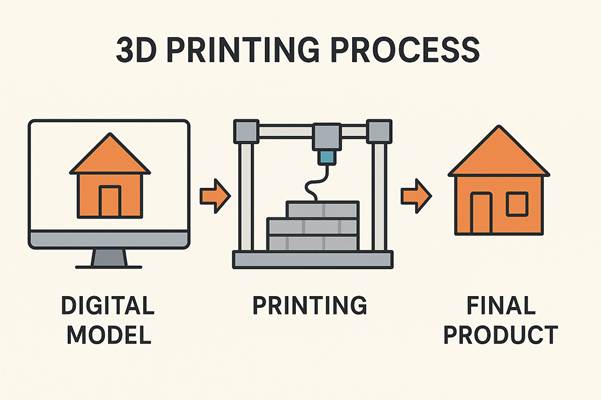
3D printing of concrete—also known as additive manufacturing in construction—is revolutionizing how we build. Instead of conventional methods involving shuttering, manual labor, and time-consuming steps, this technology allows layer-by-layer printing of concrete to create structures directly from a digital model. Globally, it has already delivered everything from low-cost houses to complex architectural forms.
But when this futuristic technology meets India’s climatic extremes, economic constraints, and material realities, the path to success is layered—just like the technology itself.
What Is 3D Concrete Printing?
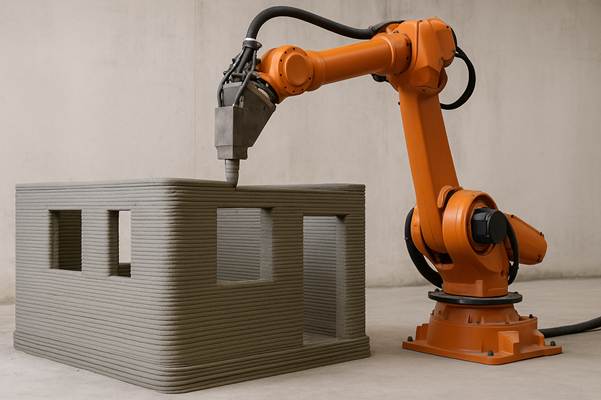
3D printing in concrete construction involves automated layering of specially formulated concrete using robotic arms or gantry systems. The design is based on a digital 3D model (typically from a BIM or CAD file), and there is little to no need for formwork.
Advantages:
- Speed of construction
- Reduced labor costs
- Design flexibility (organic or curvilinear shapes)
- Material efficiency
- Potential for sustainability via local/recycled materials
India has seen early adopters like L&T Construction, Tvasta, and IIT-Madras showcase printed houses, army bunkers, and sanitation units.
Unique Challenges in India’s Climate and Construction Context
1. High Ambient Temperatures and Rapid Curing
India’s hot and dry climate accelerates the setting time of concrete. This leads to:
- Increased risk of cracks during printing
- Difficulty in bonding layers properly
- Challenges in ensuring structural continuity
Solution direction: Use of admixtures, hydration control agents, or alternate binders like geopolymer mixes.
2. Monsoons and Humidity
Printing concrete in the open during the monsoon season or in coastal humid zones results in:
- Inconsistent curing
- Slower setting time
- Risk of washout or erosion of layers
Possible adaptation: Enclosed or semi-enclosed printing environments and weather-tuned material recipes.
3. Material Standardization and Availability
The concrete used in 3D printing isn’t typical ready-mix—it must be flowable, quick-setting, and structurally strong. However:
- Standardized printable concrete isn’t widely available in India.
- Local material variation (sand gradation, cement types) makes consistency difficult.
Need: Region-specific material codes and indigenous mix development.
4. Energy and Infrastructure Dependency
Robotic printers and digital controls demand:
- Continuous electricity
- Stable ground and connectivity
- Trained technicians
These can be challenging in semi-urban or rural areas, where 3D printing could be most beneficial.
Policy, Skill, and Market Barriers
India’s construction ecosystem is still transitioning from traditional practices. Barriers include:
- Lack of building codes and approvals for 3D printed structures
- Limited skilled workforce for operating robotic systems
- Skepticism in real estate and public sectors about durability and safety
But with support from BIS (Bureau of Indian Standards) and initiatives like PMAY (Pradhan Mantri Awas Yojana), this can be overcome.
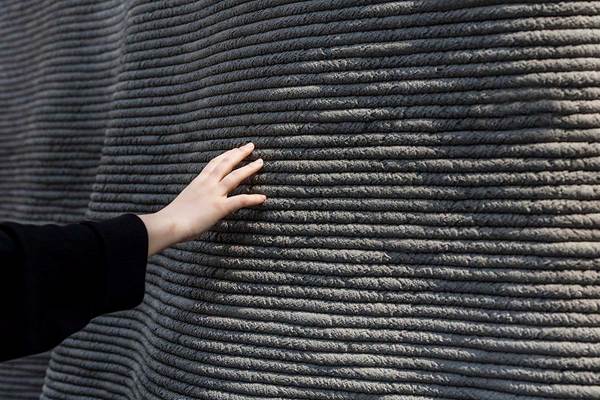
1 Photo Courtesy SWAN & gwangju design center
The Road Ahead: Innovation and Adaptation
India needs climate-responsive 3D printing solutions. The future lies in:
- Hybrid approaches combining traditional techniques with additive manufacturing
- Localized material ecosystems using fly ash, GGBS, and recycled aggregates
- Portable, lightweight printers for deployment in rural housing
- Smart curing techniques using sensors, fog systems, or even AI-based controls
Research institutes like IIT-Madras, CEPT University, and startups in Bengaluru and Pune are already contributing to this evolution.
Conclusion: A Layered Future
3D printing of concrete is not just about robotics or speed—it’s about rethinking how we build for people, places, and climates. In India’s context, innovation must not only be technological but also contextual. By embracing climate sensitivity, resource variability, and social needs, 3D printing can become not just a symbol of the future, but a tool for inclusive and sustainable development.