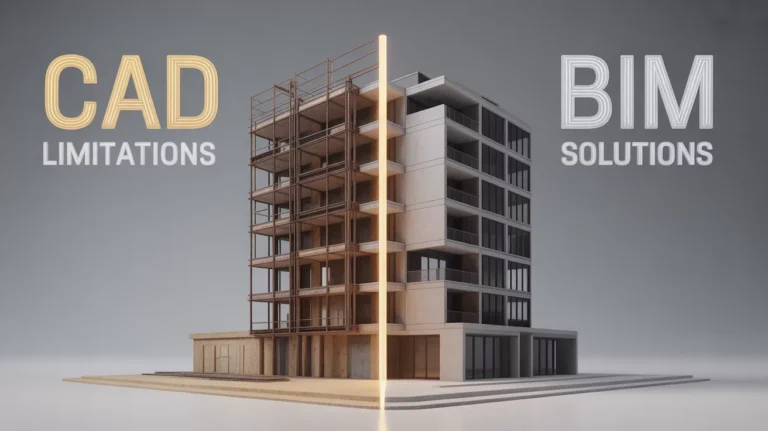
Case Studies: Successful BIM Projects in Architecture

Building Information Modeling (BIM) has revolutionized how architects and engineers design, collaborate, and deliver construction projects worldwide. From skyscrapers to large-scale infrastructure, BIM’s digital power enables smoother workflows, better visualization, and smarter decision-making. In this blog, we highlight case studies of successful BIM projects in architecture that demonstrate its real-world benefits and transformative impact on modern design and construction.
1. Shanghai Tower, China

Standing as the second tallest building globally, Shanghai Tower is a marvel of modern design and sustainability. BIM was crucial in coordinating the efforts of over 30 consultant groups working on its 121-story structure. The intelligent 3D model helped teams resolve complex structural challenges, streamline construction, and ensure precise scheduling. The tower’s curved, spiraling shape demanded exact collaboration, which BIM enabled flawlessly, making Shanghai Tower a flagship BIM success story.

Read also: Key Differences between BIM and Traditional CAD
2. Surat Diamond Bourse, India

The Surat Diamond Bourse exemplifies how BIM drives India’s infrastructure development. As the world’s single-largest office building, this project used BIM not only for visualization but also for cost estimation and scheduling efficiency. BIM’s integrated communication among architects, engineers, and contractors resulted in smooth project execution. This example highlights BIM’s growing role in managing large-scale commercial projects in Indian architecture.
3. WHIZDOM 101, Bangkok

WHIZDOM 101 is a sustainable smart city project where BIM played a central role despite initial hesitations. The project team gradually introduced BIM tools during the design and construction phases, facilitating better coordination between architects, structural engineers, contractors, and suppliers. BIM’s digital collaboration led to significant time savings and enhanced design precision, proving its value in urban development projects.
Read also: Can BIM Help Preserve the Past? Applications of BIM in Heritage Conservation
4. One Nine Elms, London

One Nine Elms, Europe’s tallest mixed-use residential tower, utilized BIM for detailed structural design, including complex underground basements. BIM’s 3D models allowed early detection of rebar clashes and construction challenges. This preemptive problem-solving saved costly delays and ensured the successful delivery of a complex urban landmark project.
5. Helsinki Airport Expansion, Finland

The expansion of Helsinki Airport’s Terminal 2 showcases BIM’s capability beyond buildings. The project team effectively used BIM for better visualization, planning, and decision-making across multiple construction phases. The model supported a comprehensive evaluation of solar panel placements, contributing to the airport’s energy efficiency and sustainable operations.
Conclusions: Why These BIM Projects Matter
These case studies demonstrate BIM’s power to transform architectural projects—big or small—by improving collaboration, reducing errors, and enabling data-driven design decisions. BIM integrates planning, design, construction, and operations into one intelligent process, helping architects deliver innovative and sustainable buildings on time and within budget.
Read also: From Blueprints to Algorithms: The Future of BIM, CAD, and Computational Architecture
For architects, embracing BIM means stepping into the future of design and construction—a future where digital tools enhance creativity, teamwork, and project success.